
Baking the Bread George Washington Ate - No. 402
How to make “Thirded Bread” in today’s kitchen + Happy 250th, America!

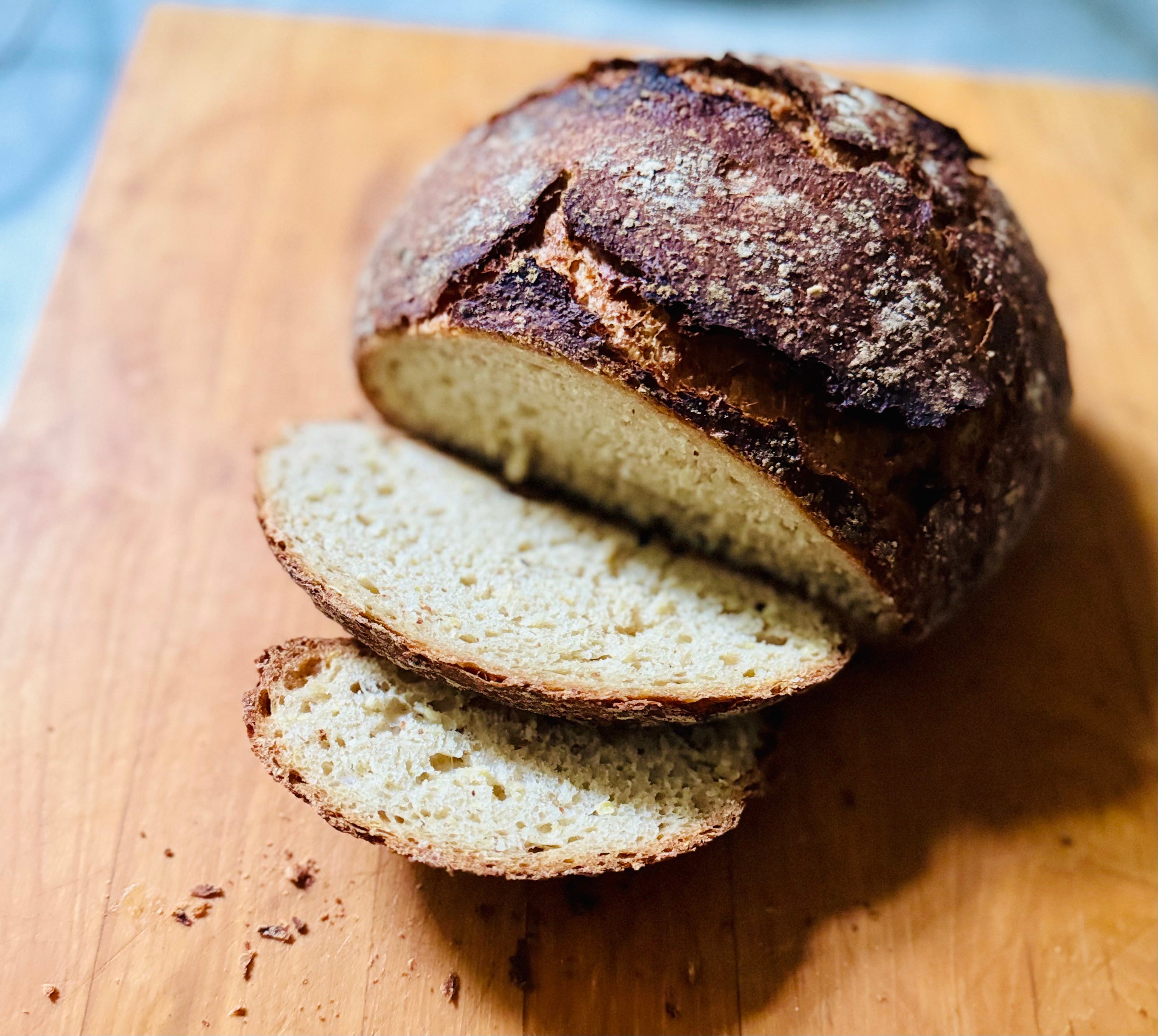
THE BREAD GEORGE WASHINGTON ATE sounded similar to my first attempts at baking.
I feared it would be dense, not rise enough, and taste horrid. But boy, was I wrong.
Even though my yeast came from the grocery store and his from ale making, and while my flour was off the pantry shelf and his was what was left after the soft white sifted flour was sold to France, our bread had something in common.
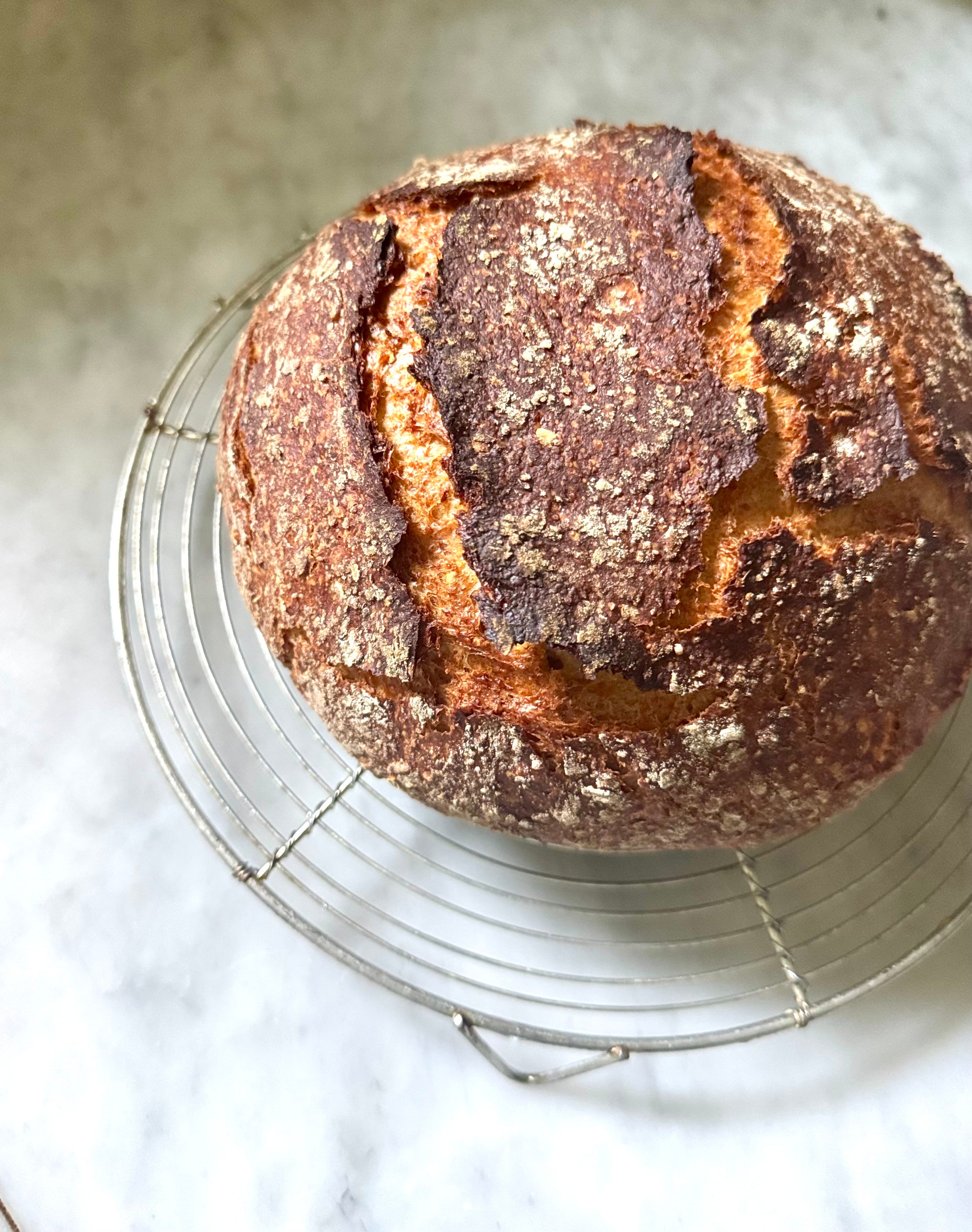
My oven tends to bake a little hot sometimes. And his was built from clay, shaped like a beehive, and ran so hot that wood coals fired to heat it had been swept out long before the bread baked the next morning. But warm and dripping with butter, his bread and mine were soul satisfying.
In thinking about what to write this month for America’s 250th birthday and signing of the Declaration of Independence, I baked George Washington’s bread.
Washington was not only our first president, but he was America’s first large-scale wheat farmer, growing at one point 16 different kinds of wheat.
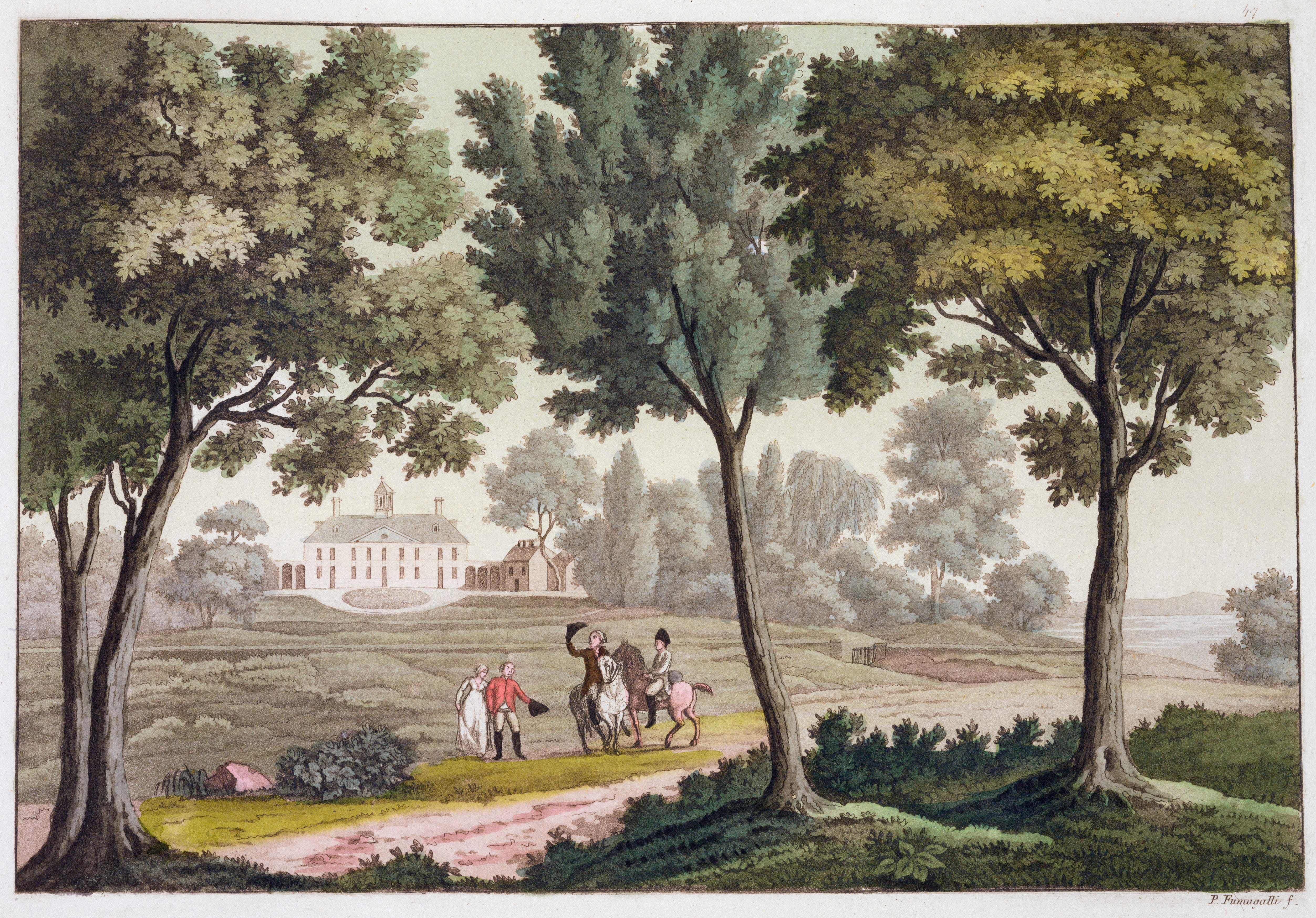
Unlike me, he enjoyed daily bread because his enslaved help awakened early in the morning and baked it for him. Depending on how many visitors were in house, they made him bread three to four times a week at Mount Vernon, the home he shared with his wife Martha along the Potomac River south of what is now Washington, D.C.
Bread is the staff of life. And in Washington’s time, wheat bread was a symbol of social status. The powerful and wealthy who owned their own ovens and people to bake bread for them lived differently than the rest of the colonists who paid for bread and didn’t have control over what it cost.
Historian Walter Edgar, author of South Carolina: A History, said bread production was regulated by law, and on the first of each month the commissary general set how much a half-crown loaf weighed. The size fluctuated according to the price of flour.
While researching George Washington’s bread, I stumbled upon the name of Justin Cherry, a professional chef and baker in Summerville, South Carolina who has embraced 18th century foodways and duplicated Washington’s bread.
He’s a self-proclaimed history nerd who named his business of baking bread at historic properties “Half Crown Bakehouse” after the first American loaf that cost a half crown.
After training with Sean Brock at Husk in Charleston, Cherry completed cooking stints in Italy before he dove into colonial bread baking. A native of Butler, Pennsylvania and the grandson of a baker, he said it seemed a natural path. His parents were elementary school teachers who loved history and often took him to historic homes and reenactments on family vacations.
“I’ve being doing living history since I was four or five years old,” Cherry said via phone. “And then Sean instilled in us an appreciation for heritage ingredients and the old way of doing things.”
Seven years ago Cherry applied for and received a research fellowship at Mount Vernon. He created a program where visitors at the historic site see bread baking in action like it was Washington’s day and then are able to purchase a loaf to take home. It’s turned out to be so popular that season ticket holders often schedule their visits as to when bread is baking.
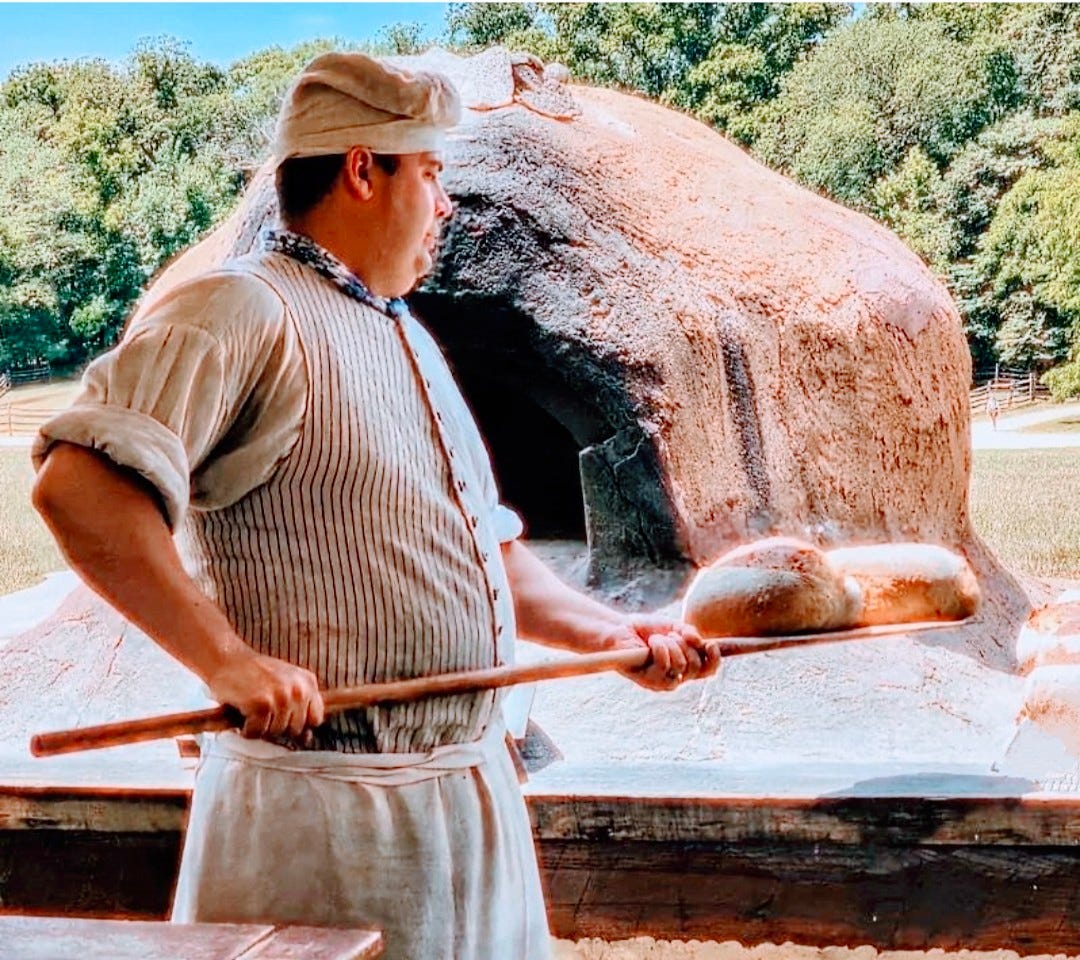
Cherry built a 3,200-pound clay beehive oven and transports it on a trailer to Mount Vernon or wherever he is giving a bread baking demonstration.
The idea for the oven came from one designed by the Salzburgers, German-speaking Protestant colonists who founded the town Ebenezer, Georgia, and later New Ebenezer, 25 miles from Savannah. They grew wheat, ran a gristmill, and became known as the best bakers in the South, having brought with them old Celtic wheats and central European wheats to grow. Their sponsors were English, and they wrote back to them about what wheat would grow in Georgia, Cherry said. The grains they produced were mostly sold to France.
To create his historic bread, Cherry first heats the oven with a wood fire of pecan or hickory, and after it’s hot, he removes the wood bits and ashes, closes the oven, which stays hot for about four hours, allowing him enough time to bake off 50 loaves on just one fire.
In Virginia, he said, Mount Vernon was built in the perfect middle ground for growing wheat for bread. It was cool enough to withstand the heat and warm enough to withstand winter’s cooler temps. “Virginia becomes a place where American wheat really takes off.”
Much of Washington’s wheat was moved between colonies and helped fuel the Revolution, he said. In addition to the Salzburgers in Georgia, wheat was also grown by the German and Swiss in Orangeburg, South Carolina, and to the north quite successfully in Gettysburg, Pennsylvania and the Connecticut River valley. Also in what today is the Piedmont of North Carolina, Fife wheat was grown in the 1730s. It was a Scottish wheat coming from the lowlands of Scotland around County Fife. (No coincidence that the Royal Governor of South Carolina was from Scotland.)
And it wasn’t just bread making that Washington was interested in. He was also a pioneer in distilling, in itself a means of preserving grain production by turning it into alcohol.
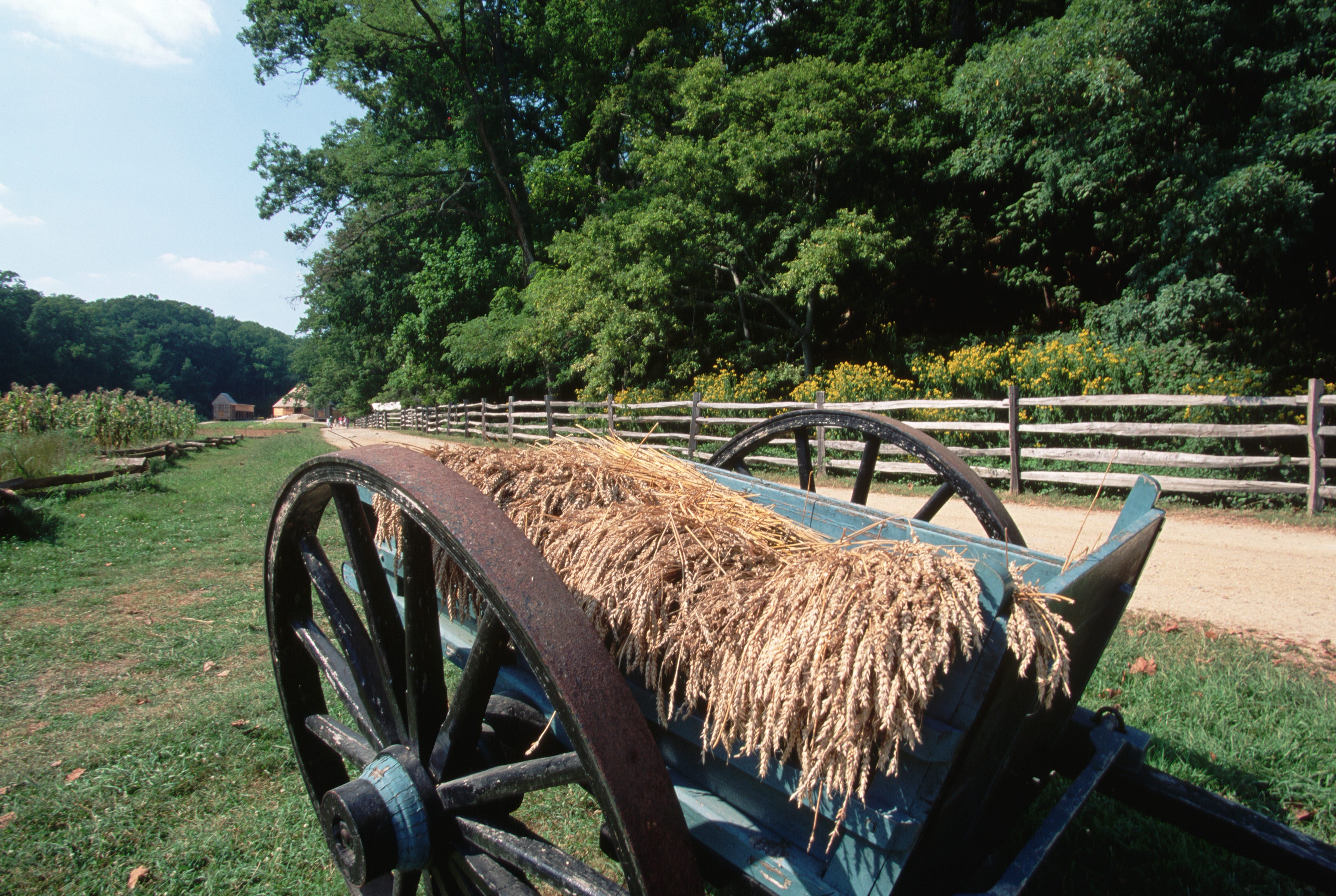
As gardeners and farmers do, Washington exchanged information about growing wheat with others around the world. In the 1790s, the Hessian Fly wiped out much American wheat, but Washington kept in touch with experts to find out what grains were resistant to the fly as well as heat, mold, and rust.
That correspondence, Cherry said, gave Washington a world platform. Many Virginia farmers had switched from tobacco to wheat in 1760. Tobacco depleted the soil of nutrients and was heavily inspected in order to be exported, but wheat flour could be sold locally. Washington created something called a seven-year crop rotation to reinvigorate the Virginia soil.
As the population grew in America, Cherry said, Washington would say that we’ve got to find a means to feed it. “Plus, who wouldn’t want to buy Washington’s wheat?”
Washington established a prestigious group of bakers to bake bread and feed the Patriot troops from 1777 to 1781. Cherry has spent the last six years researching these bakers—who they were and where they came from—and is writing two books, one on the bakers and one on Washington and his contributions to food.
He has located 24 bakers in locations around Yorktown, the mid-Atlantic, New England, and New York with West Point proving to be the headquarters of Washington’s baking department.
“We know from 1780 to the end of the war there were three to four ovens at West Point, producing about 2200 five-pound loaves a day,” he said. “I’ve been digging for years, looking at letters from the baking department reporting to their senior officials.”
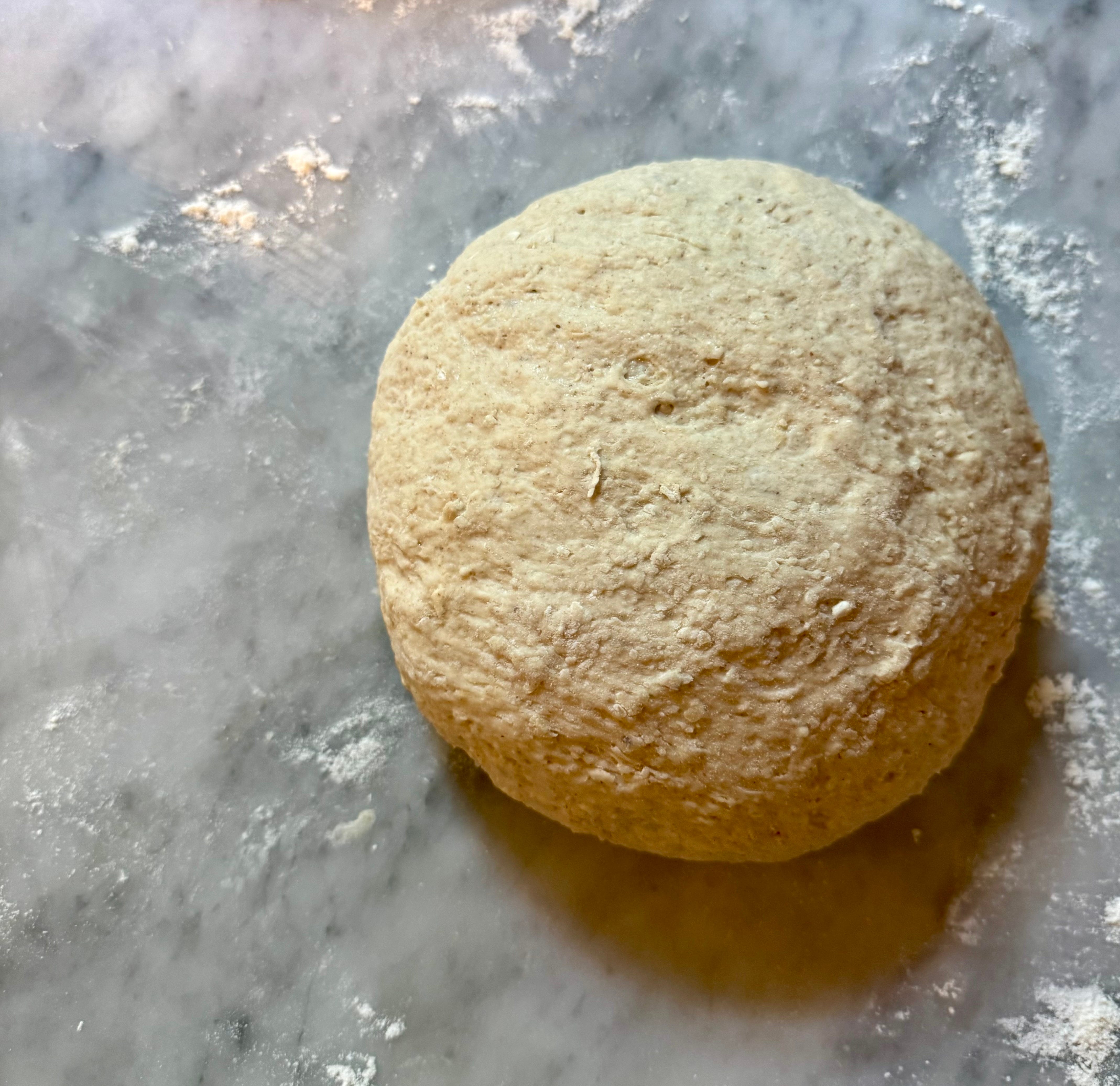
The bread recipe Cherry said is most like a loaf baked 250 years ago is what is called “thirded bread.” When wheat was short in supply, you added some rye and cornmeal.
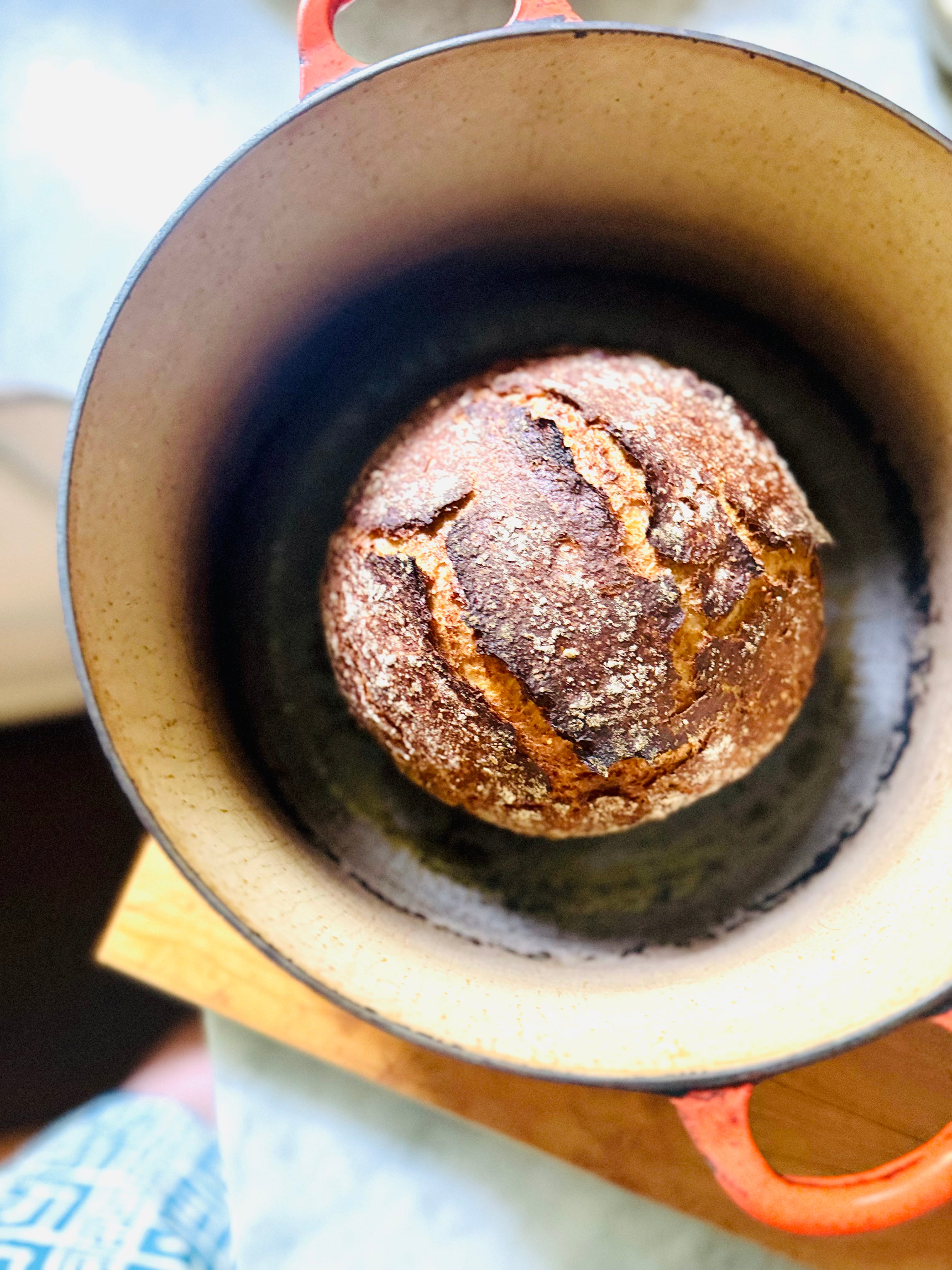
He suggested I bake this recipe using a Le Creuset Dutch oven to mimic the high heat of the wood-fired oven of Washington’s day. The recipe is quite simple.
Unlike our flour today that is enriched and bleached, Washington’s flour would have been coarser, unsifted, unbleached. The beauty of recreating such an old-style bread is we can actually find these flours today, and many are being milled from heritage grains.
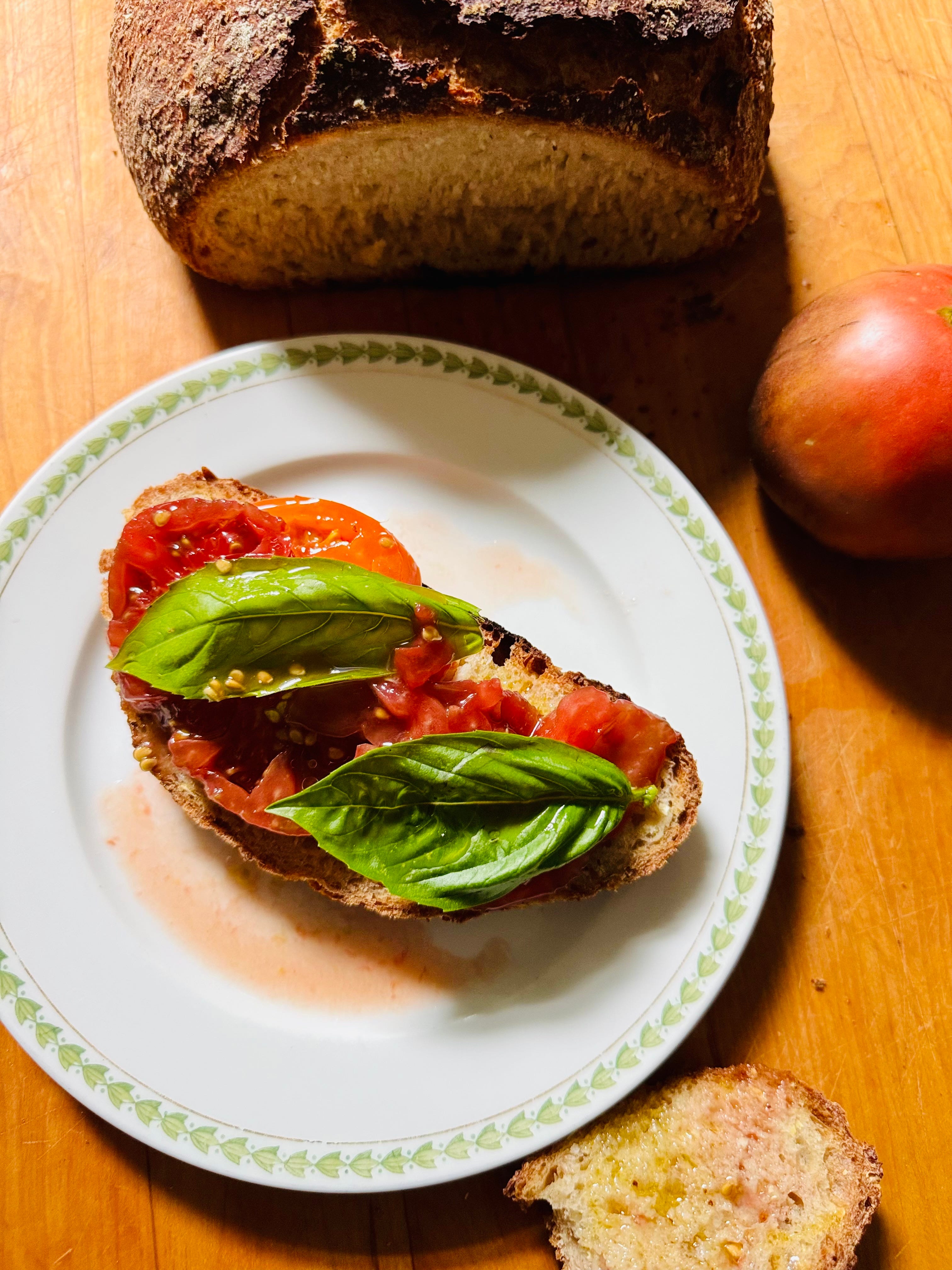
The thirded bread is delicious! I covered one slice with ripe tomatoes that had been peeled, sliced, lightly salted, and drizzled with olive oil. I spread another with peach preserves.
In Washington’s day, bread was baked to feed people.
“Nowadays we bake for flavor,” Cherry said. “Our palates have evolved a lot over 250 years.”
Other things have evolved as well. In Washington’s time, the wealthiest plantation owners and farmers had enslaved help to grow their wheat, distill their whiskey, and make their bread. Today, 250 years later, our country has banned slavery, and given women and people of color the right to vote, but the great democratic experiment of America is far from perfect.
We are testing revisions to the constitution every day. That we can criticize a government and a president, and that we have a press with the right to do so, too, are hallmarks of freedom.
The days of half-crown bread may be over, but we’ve got a ways to go.
Happy Baking!
- xo, Anne
What are you baking this summer? What’s your favorite bread to bake? Your thoughts about America this summer of 250?

THE RECIPE:
George Washington’s Bread
Historical baker Justin Cherry says most baking in Washington’s time was done by the town baker who might bake loaves as well as buns and cakes. People in the cities of Philadelphia, New York, or Alexandria, Virginia, would not have baked their own bread. However, in the backcountry, people made their own bread. Most households had a small oven on the hearth, and you could always bake in a Dutch oven over coals as well, Cherry said. His recipe, however, uses a Dutch oven and conventional oven to duplicate what might have been baked in Washington’s time.
Makes 1 loaf
1 1/2 cups (12 ounces) warm water (120 to 130ºF)
1 packet dry yeast (2 1/4 teaspoons; Cherry uses 1 tablespoon)
2 cups (240 grams) unbleached white all-purpose flour (I used King Authur AP, and Cherry says you can use KA bread flour, too)
1 cup (120 grams) rye flour
1 cup (124 grams) white or yellow cornmeal
1 tablespoon kosher salt (Cherry uses 2 tablespoons)
Vegetable oil spray or 1 teaspoon vegetable oil
Pour the warm water into a large mixing bowl, and stir in the yeast to dissolve. Cover with a kitchen towel, and place it in a warm spot in the kitchen for the yeast to begin to bubble, about 10 minutes.
Stir the white flour, rye flour, and cornmeal into the yeast mixture until the dough pulls together. Stir in the salt, cover the bowl with the towel, and let the dough rest another 10 minutes.
Uncover the dough, and turn it out onto a surface dusted with about 2 tablespoons white flour, or leave it in the bowl to knead. With your flour-dusted hands knead until the dough becomes elastic, about 5 minutes. Clean up the bowl if needed (dough bits sticking to the sides), and place the dough back into the bowl, and cover with the towel. Every 30 minutes for the next 2 hours, do a series of 3 folds, grabbing the dough on the bottom of the bowl and stretching it diagonally over the top to the opposite side. Dust your hands with flour if the dough is sticky.
Preheat the oven to 450ºF. When it reaches this temperature, place a large Dutch oven in the oven 10 minutes to heat. While the pan heats, take the dough out of the bowl and shape it on the countertop into a round, using a rotating motion with both hands to frame the circle. Let the dough rest until the pan heats. Carefully mist or grease the pan lightly with oil and place the dough in the center of the pan. Cover the pan with its lid, and place it in the oven for 25 minutes.
After 25 minutes, remove the Dutch oven lid and place the pan back in the oven for another 25 minutes. It should look well browned and hard. If you insert an instant-read thermometer, it should read 200ºF. Carefully remove the pan from the oven and the bread from the pan. Let rest on a rack until cool enough to slice, about 2 hours, or overnight.
Another interesting article! Thank you so much. I read an article recently about Washington's master baker during the war, Christopher Ludwick from Germany and there was a stamped cookie recipe ( I think gingerbread with the article). The bread I will have to think about (not a fan of rye-too strong for my tastes and also not used to it being from the south). It was amazing to me to think of the logistics for baking bread for a large number of troops!
I live just up the road from Mount Vernon. I had no idea about the bread baking days. Definitely putting it on my must-do list. Your bread looks delicious, Anne. I am still in cookie-baking mode but pretty soon I'll be back to regular baking. I've bookmarked many recipes to make from Baking in the American South, and now I will add this bread to the list.